Ticketing & support9 min
How Ticket Workflows Truly Boost Your Team's Productivity
Jan 28, 2026
An AI chatbot in a webshop is not a gimmick but a salesperson and support agent that never sleeps. This article shows how a good chatbot removes questions, nudges hesitant visitors over the line and relieves your team, and where the line sits between what AI handles fine and what a human must take over.
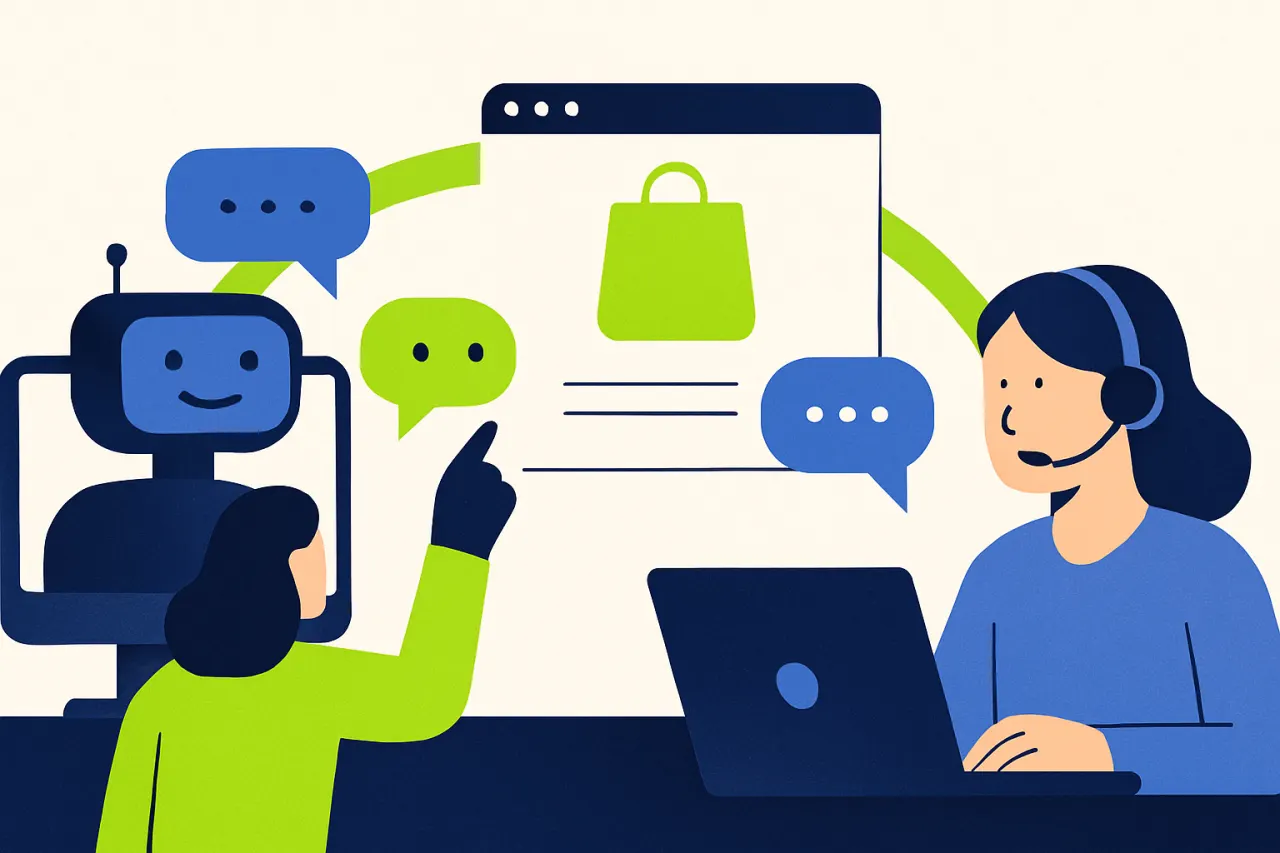
A webshop has no opening hours, but the team behind it does. A visitor hesitates at eleven at night about whether a size fits or a delivery will make it before the weekend. There is nobody to ask. That hesitation costs a sale, and the question that still comes in the next morning costs the support team time. An AI chatbot fills exactly that gap: a conversation partner that is always on and can answer most questions instantly.
Yet the word chatbot has a bad name, and not without reason. The rigid choice menus of the past, which only responded to a handful of buttons and stalled on any off-script question, have put many webshops off. But a modern AI chatbot is something else. It understands natural language, knows the product catalog and the order status, and can hold a real conversation instead of forcing a menu. The difference between those two decides whether a chatbot helps or irritates.
This article covers what an AI chatbot concretely delivers in a webshop. Where does the line sit between what AI handles itself and what a person takes over? And how do you set one up so it serves both sales and service? The common thread. A good chatbot is the first line that removes the simple questions, so people can handle the hard conversations. It does not replace your team.
Most questions in a webshop are repetition. Where is my order? What is the delivery time? How do I return something? Does this product go with that one, and is it in stock? Each is a question whose answer is recorded somewhere, in the order system, the product catalog or the return policy. Yet an agent types the answer out again every time. That is not only a waste of time, it is also frustrating work that crowds out the real support questions.
The second problem is timing. The peak of questions rarely coincides with the team's working hours. Evenings, weekends and the busy stretch around holidays are exactly the moments when visitors buy most and ask most, and that is precisely when staffing is thinnest. A question left unanswered at nine in the evening is often a cancelled order or a lost visitor by the next morning. The waiting time costs revenue directly.
The third problem is doubt at the wrong moment. A visitor with one last question during checkout drops off if that question is not answered immediately. ‘Can I return this for free?’ or ‘Will this arrive before Friday?’ are questions that decide a purchase. If the answer comes straight away, the order goes through. If the visitor has to wait or search, the cart is likely abandoned. A chatbot catches exactly those moments.

The value of an AI chatbot is not in replacing people, but in removing the repeat questions that tire your team anyway. The chatbot handles the first line, day and night, and answers instantly whatever has an answer. Anything it is not sure about, it hands to a human, with the conversation and context attached.
A chatbot is only as good as the knowledge it draws on. A bot without a foundation makes up answers or says no to everything. So give it access to your return policy, delivery terms, frequently asked questions and product information. That is not manually entering scripts, but making available the information that already sits somewhere. The better the source, the more reliable the answer.
This is where it differs from the old choice menus. An old-fashioned bot needed a pre-typed answer for every question and stalled on anything that deviated. An AI chatbot drawing on a good knowledge base can understand a question phrased a little differently than expected and still give the right answer. The knowledge base is the foundation, the AI is the interpreter between.
Most webshop questions are about a concrete order, not general policy. ‘Where is my parcel?’ can only be answered if the chatbot knows the order status. So connect the bot to your order system and customer data. After verification it can say what the status is, when delivery is expected and which products are in the order. Without that connection a chatbot stays limited to general answers and the customer still has to wait for a human.
A concrete example: a customer asks at half past ten in the evening where his order is. A bot with access to the order status and the track and trace fetches the answer immediately and gives the expected delivery date. The same question to a bot without a connection only yields a general story about delivery times, after which the customer drops off disappointed. Read more about how customer data and context make the difference between a general and a personal answer.
Not every question belongs to a chatbot. A simple status question or return instruction the bot can handle fine itself. A complaint, an emotional conversation or a complex exception belongs to a human. The art is to set that line in advance instead of letting the bot try everything. A chatbot that knows its limits and hands over in time wins trust. A bot that stubbornly keeps trying loses it.
So set clear rules for the handover. Is the bot unsure of the answer? Is it a complaint, or does the customer explicitly ask for a person? Then the conversation goes straight to an agent, including everything discussed so far. The customer does not have to repeat the story, and the agent steps in with full context. This way the handover feels like a smooth transfer instead of a restart.
A chatbot in a webshop is not only a support agent but also a salesperson. A visitor hesitating between two sizes, asking about the delivery time or looking for a product that pairs with another, is in the middle of buying. A bot that gives a clear, helpful answer at those moments nudges the visitor over the line. That is not pushy selling, but removing the last hurdle before a purchase.
The difference from a passive support bot lies in attitude. A selling chatbot answers the question and thinks along. It points out the free return window if that removes the doubt, or confirms an order will arrive on time if that tips the balance. The information that supports the purchase, it gives proactively. This shifts the chatbot from a cost into a contribution to revenue.
A chatbot is never finished at launch. The most valuable information sits in the questions it could not answer. Every time the bot handed over or came up empty points to a gap in the knowledge base or a missing topic. Collect those cases and use them to fill in the knowledge, so the bot can do a little more itself each week.
This is the difference between a chatbot that gets stuck at a fixed percentage and one that slowly grows toward handling the bulk of the questions. Treat the handovers not as failure but as a to-do list for improvement. A topic that recurs often and keeps getting passed on deserves a clear answer in the knowledge base, after which the bot can handle it itself next time.
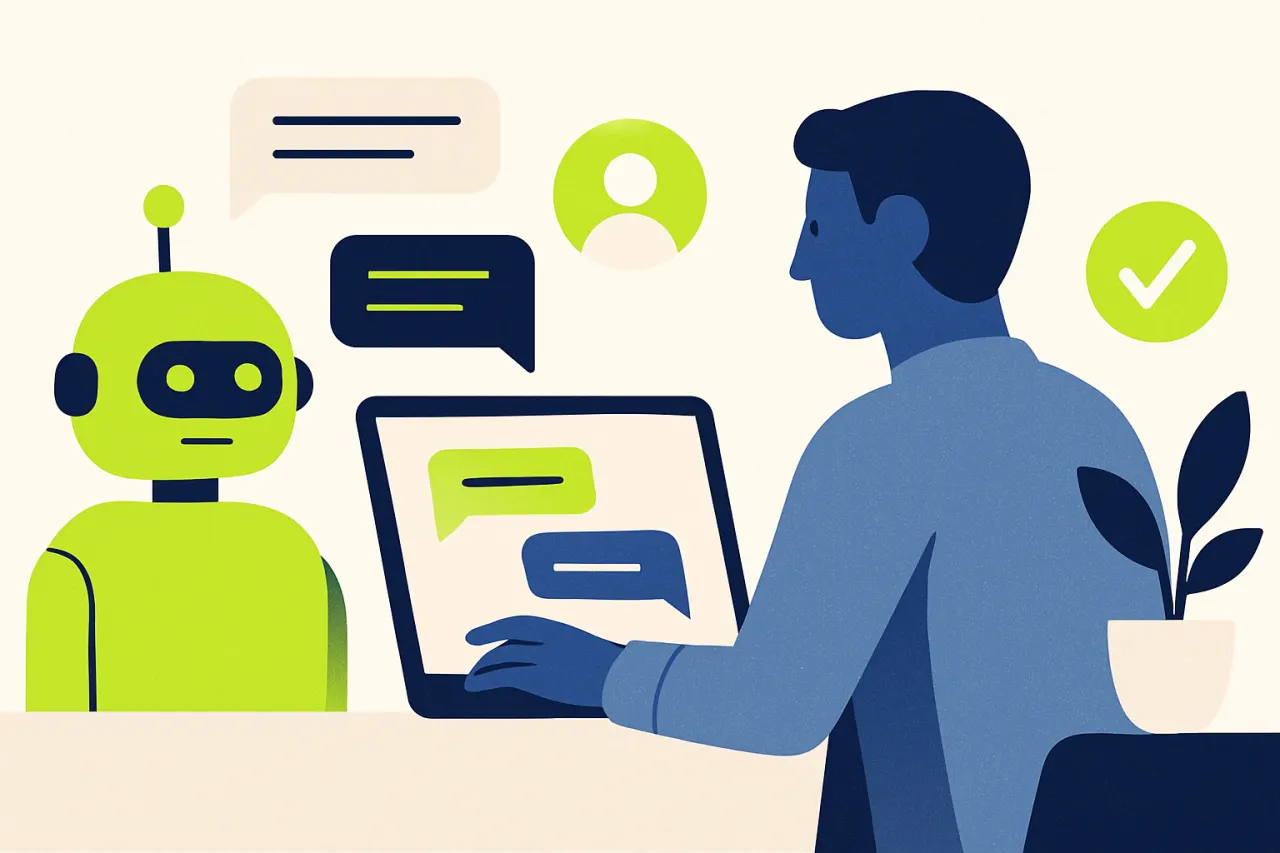
Most disappointments with chatbots come not from the technology, but from the setup. Four mistakes keep returning.
The question is rarely whether a chatbot replaces people. It does not, and that is not the point. The right question is how the chatbot and the team reinforce each other. The bot removes the volume and the repetition, the team keeps the hard, sensitive and valuable conversations. A team that no longer has to answer ‘where is my order’ all day finally has time for the customer with a real problem.
The tipping point is the handover. A chatbot that lets go at the right moment hands the conversation over with full context. To the customer that feels like good service rather than a brush-off. The customer does not even notice a handover happened, because nothing has to be repeated. That seamless interplay between AI and human is exactly where the difference between an annoying and a pleasant chatbot lies.
Honesty toward the customer matters too. A chatbot does not have to pretend to be a human, but should also not put up a wall. Being clear about what the bot is, and bringing in a human in time, builds trust. A customer who knows a human is always reachable accepts a bot for the simple questions far more easily. This way the chatbot becomes a natural part of customer service for webshops instead of an obstacle to it.
A chatbot answering out of thin air runs that risk, but a good setup prevents it. By having the bot draw on your own knowledge base and order and product data, it answers based on what is truly recorded instead of guessing. And when it is unsure, it should hand over to a human rather than invent. The knowledge foundation and the clear line decide whether a chatbot is reliable.
An AI chatbot only truly helps a webshop when it is more than a button menu. Feed the chatbot your own knowledge and link it to order and customer data. Draw a clear line to the human team and let it think along about the purchase. It then becomes a first line that removes repeat questions and catches doubt at the deciding moment. The team is left with time for the conversations that truly matter.
It starts with the setup rather than the technology. A solid knowledge foundation, a working handover to people, and a rhythm of improving based on what the bot does not yet know. An AI chatbot, a smart knowledge base and customer context come together in customer service for webshops, with a smooth handover to the team. Watch a demo and see how the first line never sleeps again.
Cuego
cuego.io
Your Cue to Go.
The Customer Contact Platform where conversations, customer data, knowledge, workflows, people and AI come together. Book a 30-minute demo and see it against your own situation.
30-minute demo · then we set it up together
Rather look for yourself first? Take the free website scan
See also
Everything in Cuego connects. Discover the modules, solutions and integrations that belong with this.