
E-commerce9 min
Black Friday and peak season: preparing your webshop's customer service
Jul 12, 2026
Black Friday, the holidays, a sale or a viral post: the volume of customer questions spikes while your team stays the same size. This is the complete playbook to handle peak demand without hiring, by letting AI absorb the predictable volume and keeping your team free for the rest.
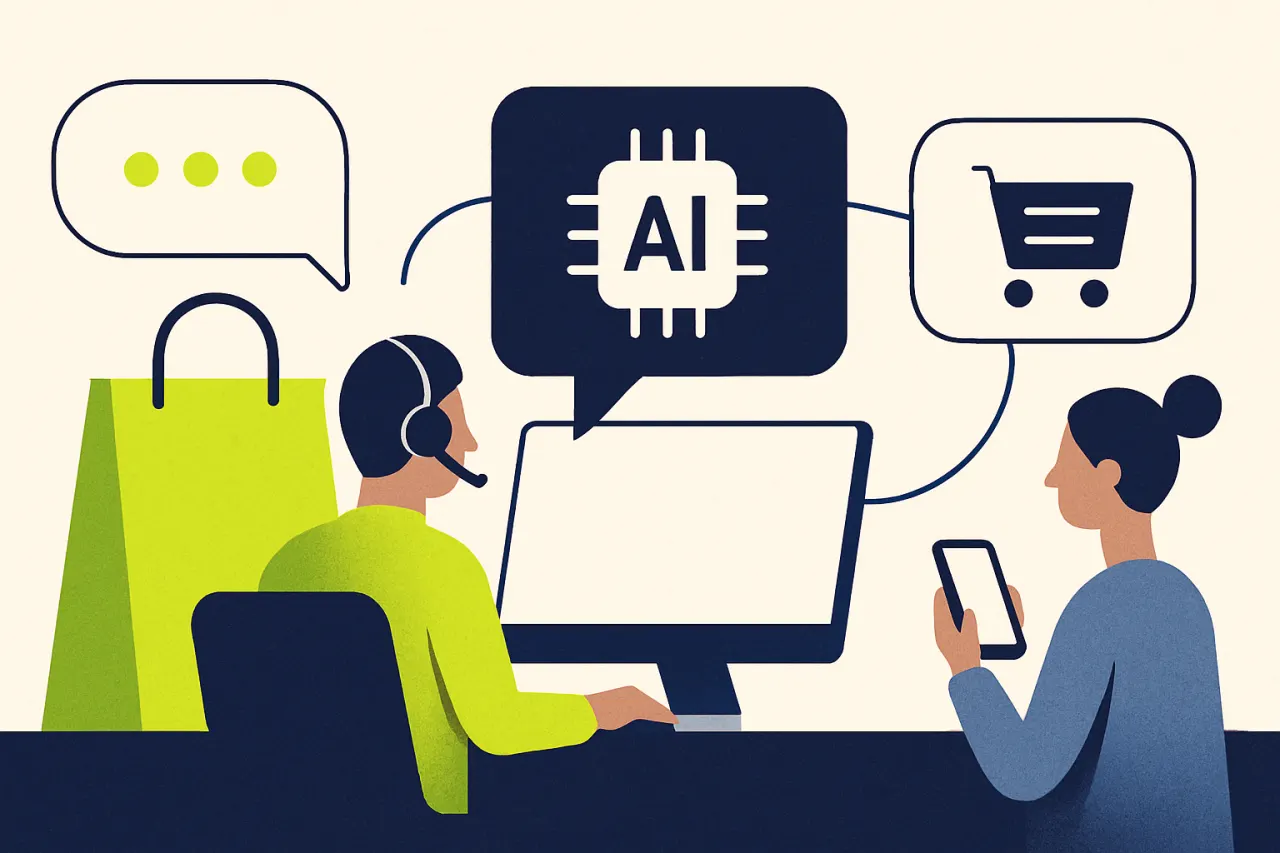
Peak demand is, for many webshops and service teams, the recurring moment when everything goes wrong at once. Black Friday, the holidays, a sale, a successful campaign or a viral post. Sales rise, and the number of customer questions rises with them. The difference from an ordinary workday is not only the volume but the simultaneity. Hundreds of customers with the same question, at the same moment, while your team is exactly the same size as the week before.
The classic move is hiring or bringing in temporary staff. That is expensive, slow and often impossible. Finding and training good people takes weeks, while a peak is over in days. This article therefore describes a different approach. Automate the predictable part of the volume, so your team only sees the questions that genuinely need human attention. The goal is not to work harder during the peak, but to set up the peak so it largely handles itself.
The reflex when pressure rises is more capacity: extra people, longer shifts, all hands on deck. But each of those options hits a wall. Hiring temporary staff costs weeks of recruitment and training, and the very product knowledge and tone of voice customers expect cannot be taught in a few days. A temp who does not know the return policy delivers slow and inconsistent answers at exactly the moment it matters.
Having the permanent team work longer is an even shakier plan. Overtime during a peak leads to fatigue, mistakes and eventually absence. The busiest period of the year is exactly the wrong time to burn out your best people. And even if everyone goes flat out, the arithmetic stands. If volume triples while the team stays the same, wait times rise.
The real cause of the pain is that most of the peak volume consists of the same handful of questions. During busy periods the nature of the questions barely changes, only the quantity. People typing the same answer a hundred times is not a capacity problem but an automation opportunity. That is where the solution lies.
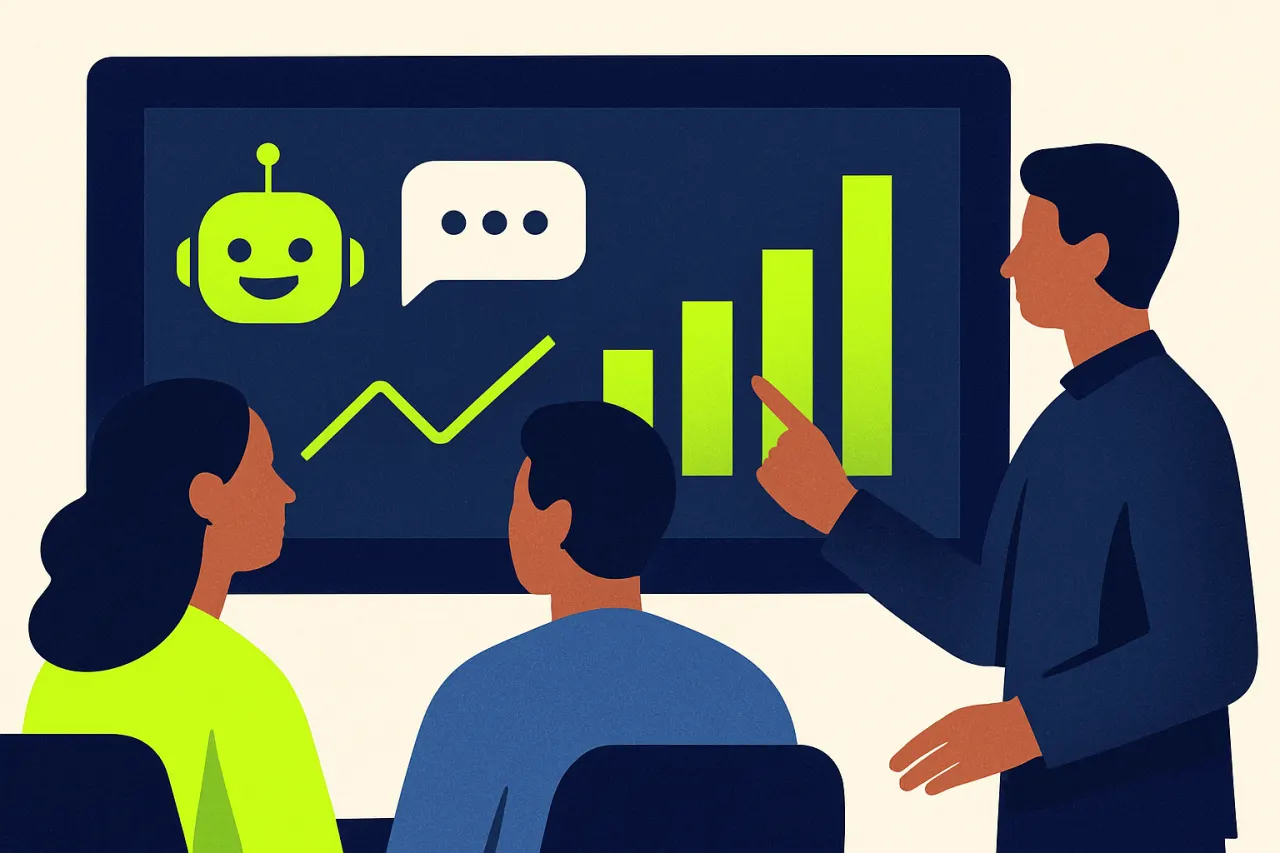
The volume rises, but the variety barely. During busy periods it is mostly the same questions arriving, just far more often. Anyone who automates that repetitive part flattens the peak without a single extra employee.
The following five steps prepare your service department for the peak and let AI do the heavy lifting. They work best if you set them up before the rush, not when the inbox is already overflowing.
Preparation starts with data. Look back at the previous peak and sort the tickets into categories. In almost every webshop a small number of question types causes most of the volume. Delivery status, returns, stock, discount codes and delivery windows around the holidays. This list is your automation target. You do not need to automate everything, only the few categories that together make up the volume.
For questions with a single answer, deploy an AI agent that answers itself. It fetches the answer from your knowledge base or from connected systems, recognises the customer and the order, and delivers a personal answer instantly. Because an AI agent does not tire and works infinitely in parallel, it does not matter whether ten or a thousand questions arrive at once. The wait time on a standard question stays at zero, even at the peak of the rush.
The cheapest question is the one that is never asked. During a peak, delivery times often lengthen and uncertainty rises. So send automatic updates at every status change and be honest in advance about longer delivery windows. A customer who proactively hears that their parcel will arrive a day later around the holidays does not send a question. That way you reduce the volume at the source, alongside absorbing it.
Not everything can be automated, and it does not have to be. Make sure the questions that go to your team are handled as efficiently as possible. An AI that already categorises each ticket, summarises it, pulls in the customer history and proposes a draft answer makes every human conversation faster. During a peak, every minute saved per ticket counts double.
In the chaos of a peak, the right order is crucial. Let the AI order the queue by urgency and tone: a customer threatening to cancel or with an urgent problem moves up, a general question can wait. That way your limited human capacity ensures the most valuable conversations are picked up first.

A peak punishes poor preparation mercilessly. The three most common mistakes:
A peak is also a measurement moment. During and after the rush, track a few numbers so you stand even better next time. The most important is the automatic resolution rate: what share of the incoming volume was resolved without a human. If that percentage rises compared with the previous peak, the automation is absorbing more and more.
Also look at wait time broken down by question type. The wait time on standard questions should not rise during a peak, because the AI handles those. If the wait time on complex questions does rise, you know exactly where your human capacity is pinched and can steer there specifically. Also follow contacts per order: if that stays low during the peak, your proactive communication is working.
Improvement happens between the peaks. After each busy period, analyse which questions still went to people and whether part of that was automatable. That way every next peak becomes more manageable, without your team growing with the volume.
A peak is rarely a surprise. Sales, holidays, a product launch or a campaign sit in the calendar well in advance. That is exactly why preparation decides how the rush feels. Teams that only react once the queue is full spend the whole period behind the facts. Teams that have set things up in advance absorb the same wave without panic.
Preparation starts with knowing your own patterns. Which questions spike hardest during busy periods, which of those are repeatable, and which can be caught in advance with better information or automation. A large part of the extra volume during a peak is the same handful of questions. Delivery status, returns, stock, discount codes. Exactly the kind of questions the AI can handle on its own when the knowledge base and connections are in order.
It also helps to agree in advance what happens if it does get too busy. Which questions get priority, which can wait, and at what point the team switches to a stripped down way of working where only the essentials are picked up. By making those choices up front instead of in the middle of the rush, quality holds up precisely when the pressure is highest.
A peak is also a learning moment. Pressure is what makes the creaking visible. Which questions caused the most delay? Where did automation get stuck? What information was missing, so people had to step in anyway? By analysing that afterwards, every peak becomes preparation for the next.
The recurring questions that surfaced during the rush are valuable input for the knowledge base. What was still answered manually during this peak can be caught for next time by the AI or by better information up front. This way the manual volume drops a little further with every peak. The department gets steadily more resilient to busy periods without structurally needing more people.
Yes, and that is exactly the most important part. Sales, holidays and campaigns are set well in advance, so you can catch the recurring questions up front with a solid knowledge base and automation. The better the preparation, the calmer the same wave of questions plays out.
Peak demand is not a capacity problem but a repetition problem. The volume rises, the variety barely, and that makes most of it automatable. Let an AI agent absorb the predictable volume, communicate proactively and streamline the human work. That handles even a tripled volume without one extra employee and without burning out your best people.
Want to enter the next peak prepared? See how Cuego helps with automating customer service, how the AI agents absorb the volume and how a strong knowledge base forms the basis for good answers. Or request a demo and see it applied to your own busy periods.
Cuego
cuego.io
Your Cue to Go.
The Customer Contact Platform where conversations, customer data, knowledge, workflows, people and AI come together. Book a 30-minute demo and see it against your own situation.
30-minute demo · then we set it up together
Rather look for yourself first? Take the free website scan
See also
Everything in Cuego connects. Discover the modules, solutions and integrations that belong with this.