AI & Automation9 min
What if AI in customer service makes a mistake? Managing the risk
Aug 2, 2026
Phone calls often produce valuable information that then evaporates: a promise, a follow-up action, an appointment. When phone works together with AI and the CRM, a call follows up on itself with tasks, context and clear next steps.
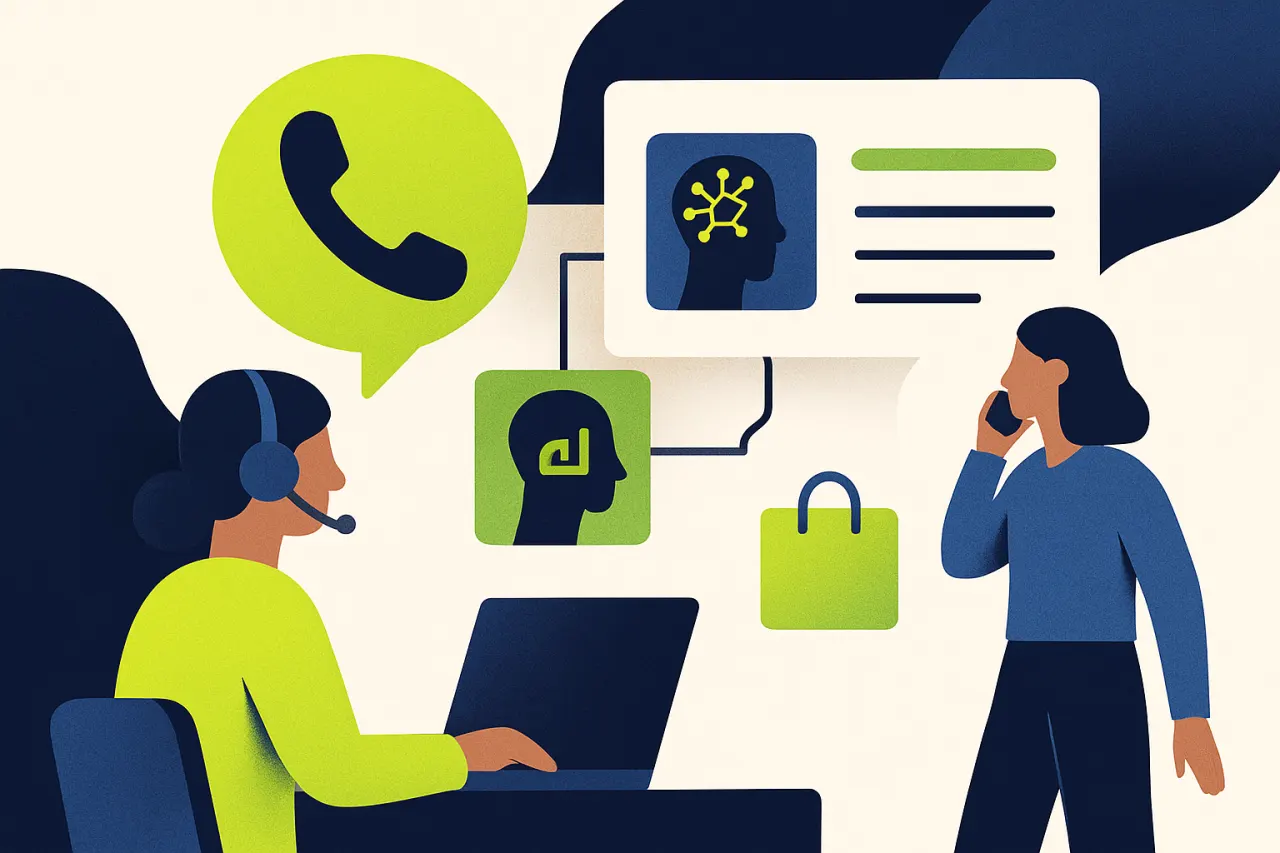
The phone remains one of the most direct channels in customer contact. A customer calls because a question is too complex for a form, because it is urgent, or because they prefer to hear a human voice. The problem is that a phone call often evaporates the moment the receiver goes down. The appointment that was made, the promise to look something up, the follow-up action needed: it lives in the agent's head and nowhere else. With that, most of the call's value is lost.
This article explains how phone changes when it works together with AI and the CRM, and what it means for a call to follow up on itself. It describes why standalone phone leaves so much behind, how to connect calls to context and tasks, the pitfalls involved and how to measure whether the approach works. The core: a call is only finished when the follow-up action is arranged.
In many companies the phone stands apart from every other system. The agent picks up, helps the customer and hangs up. What was discussed ends up at best in a loose note, or nowhere at all. If that same customer calls back later, the conversation often starts from zero again, because nobody can find the earlier call.
The second gap is follow-up. Many calls end with a promise: I will look it up, I will call you back tomorrow, I will send you the details. Without a system that promise depends on one person's memory. If things get busy or that person is out, the action is left undone and the customer calls back disappointed. That is not only frustrating for the customer, it also costs the team extra work that could have been avoided.
The third gap is insight. Who calls about what, how often and with what result? Without a link to a central system, phone calls remain a blind spot in service. Patterns stay invisible, while those very patterns often reveal where processes or information fall short.

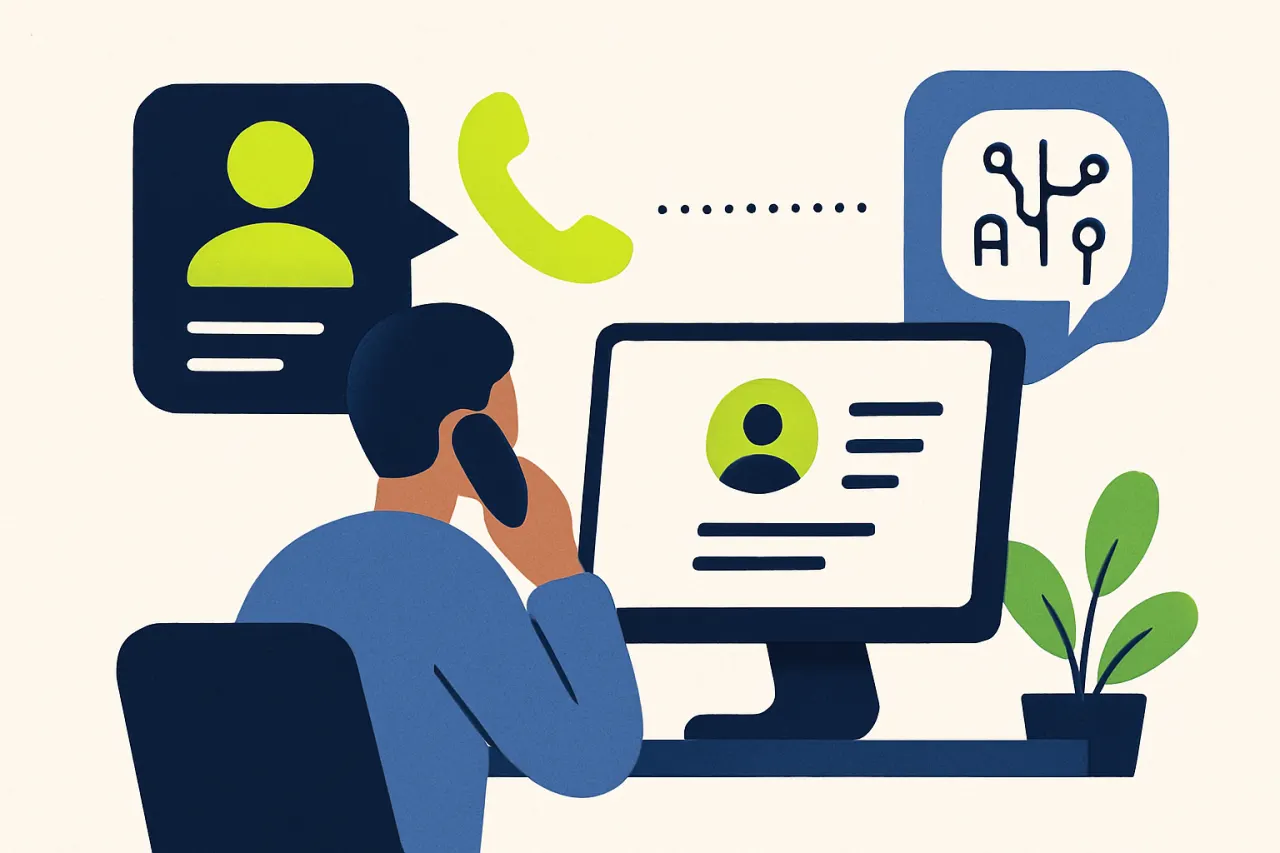
When phone is connected to the CRM and AI listens along and summarises, a call becomes more than a snapshot. Context is ready before the agent picks up, and on hanging up a summary is created automatically with the right follow-up actions. The call follows up on itself.
The biggest time gain is at the start of the call. When phone is connected to the CRM, the system recognises the number. It immediately shows who is calling: name, earlier conversations across all channels, open questions and order history. The agent does not have to ask for name, order number or context, but starts the call already informed. That saves time and gives the customer the feeling of being known.
Taking notes during a call is distracting and error-prone. AI can summarise the conversation, so that afterwards what was discussed is recorded automatically. The agent reviews the summary and keeps control, while the manual typing disappears. The summary goes to the customer file, so the call stays findable and a next colleague can build on it directly.
Every call that ends with a promise should produce a task. If you promise to call back, look something up or send details, that becomes a task with an owner and a deadline. The follow-up no longer depends on one person's memory. The task is visible to the team and stays open until it is done, even if the original agent is briefly away.
A phone call should not stand on its own. When it returns in the same shared inbox as email and chat, a complete picture of the customer contact emerges. If the customer calls and then emails, you see both together. This stops channels from working past each other and ensures a question is handled well in one go.
When calls are recorded and summarised, patterns emerge. Which topics keep coming back? Where do customers get stuck? These insights show where information or processes can improve. A question that keeps returning by phone is often a sign that something on the website or in the knowledge base is missing or unclear.
The combination of phone and AI offers a lot, but there are pitfalls that undermine the value:
Whether the approach works shows in concrete signals. Look first at the number of callbacks that arise because an earlier promise was not kept. When promises consistently become tasks, that number drops, because follow-up no longer depends on memory but on a system that reminds you.
Also watch the time at the start of a call spent gathering context. When the agent immediately sees who is calling and what is going on, the call becomes shorter and more focused. A second signal is the number of customers who have to call again about the same matter. If that drops, calls are more often handled well in one go.
Finally, conversation data itself is a measuring instrument. By reviewing summaries you see which topics keep returning by phone. That is an opportunity. A question often called about usually belongs in the knowledge base or on the website. Then the customer finds the answer themselves and call volume drops. The best result is a phone that is no longer a blind spot, but a source of insight and a channel where nothing is left behind.
In many organisations the phone is the last channel without a memory. A call happens, something is agreed, and the moment the receiver goes down the content disappears into the head of whoever picked up. If the customer calls back later, everything starts over, often with a different colleague who knows nothing. That lack of continuity is exactly where phone service falls apart.
Cuego Telephony changes this by treating every call as a trackable contact rather than a fleeting moment. On an incoming call the system recognises the caller. It immediately shows the customer, recent orders and open items. The agent starts with context and does not have to search. Afterwards the call is automatically transcribed and summarised, and a ticket is created with the right follow-up.
This makes a phone call part of the same file as email and chat. A colleague who is in touch later sees what was agreed on the phone without the customer having to repeat it. Missed calls become visible and actionable instead of forgotten, and agreements made over the phone no longer fall into a black hole.
The value of a transcribed and summarised call lies in what happens afterwards. A summary is not an archive piece, but the starting point for concrete follow-up. A call often leads to an action. Changing an address, looking something up, calling back or handling a complaint. When that action is created automatically as a task from the summary, nothing falls through the cracks anymore.
This brings telephony in line with the same way of working as the other channels. A promise made over the phone becomes a trackable task with an owner and a status, just as a commitment in an email would. The team works from one list of what still needs to happen, regardless of which channel the question came in through. This makes telephony a full part of service instead of a separate island.
If you enable recording and transcription, every call is recorded, automatically transcribed and summarised. It is configurable per account, so you decide whether it is on. The summary then forms the starting point for follow-up, for example a task or a ticket.
Phone does not have to be a channel where value evaporates. When it works with AI and the CRM, context is ready before the phone rings. Every call is summarised and recorded. And every promise turns into a task that cannot be forgotten. A call follows up on itself, and the team keeps the overview instead of relying on memory.
Build further by connecting the pieces. Cuego Telefonie with the right context. A CRM with a customer view on every call. Tasks and follow-up for every promise. And a shared inbox that brings all channels together. Curious how this works in practice? Request a demo.
Cuego
cuego.io
Your Cue to Go.
The Customer Contact Platform where conversations, customer data, knowledge, workflows, people and AI come together. Book a 30-minute demo and see it against your own situation.
30-minute demo · then we set it up together
Rather look for yourself first? Take the free website scan
See also
Everything in Cuego connects. Discover the modules, solutions and integrations that belong with this.